
"Brazil frost"
700 article(s) found

Bolivian boutique coffee beans American coffee balance coffee boutique coffee
Whether the taste is balanced or not. Refers to the degree of balance and combination between the various flavors of coffee. In the past, coffee trees in Bolivia used to act as hedges and ornaments around the garden. Real commercial production began in the early 1950s. The great frost of 1957 seriously damaged Brazil's coffee industry, while Bolivia (Bolivia) benefited from it and developed rapidly.

Coffee Belt (COFFEE WORLD MAP) Coffee trees grow around the equator
Coffee trees grow in tropical or subtropical agricultural gardens centered around the equator and called coffee belts. Most of the coffee production is between the Tropic of Cancer, 25 degrees north of the tropical or subtropical equator and 30 degrees south of the equator. An area with an annual average temperature of 16-25 degrees Celsius, no Frosts Descent and rainfall of 1600-2000 mm. At present, coffee is mainly produced by seven countries.

When does coffee from Papua New Guinea enter the market?
The frost in 1975 destroyed most coffee crops in Brazil, but stimulated the development of coffee in Papua New Guinea. The Government has implemented a scheme to finance the creation of about 20 hectares of coffee plantations in rural or collective land ownership. This measure has indeed increased the penetration of coffee in the local economy, with annual production reaching 1 million bags by 1990. However, almost

A brief introduction to the treatment method of grinding degree and baking degree of Brazilian yellow bourbon coffee beans
In addition, the biggest thing that iron pickup and bourbon have in common is that they both need the protection of shade trees. if there is no shade tree to help it block the sun, it is not only not conducive to its growth, but also greatly reduces the flavor of coffee beans. In Brazil, because the planting area of coffee is too large and the degree of mechanized production is relatively high, people often harvest ripe and green fruits together.

A little knowledge of coffee the geographical location of the coffee belt
Most of the coffee production is between the Tropic of Cancer, 25 degrees north of the tropical or subtropical equator and 30 degrees south of the equator. An area with an annual average temperature of 16-25 degrees Celsius, no Frosts Descent and rainfall of 1600-2000 mm. At present, coffee is mainly produced in more than 70 countries. The Big self is located at an altitude of 300,400m, sometimes between 2000 and 2500 meters above sea level.

Detailed introduction of the varieties of Arabica beans
Follow the caf é (Wechat official account vdailycom) found that the beautiful cafe opened a small shop of its own. Arabica coffee accounted for 70% of all coffee production. Arabica coffee accounted for 80% of all coffee production. Its excellent flavor and aroma make it the only coffee that can be drunk directly. But its resistance to dryness, frost, diseases and insect pests is too low, and it is especially intolerant to coffee.
Papua New Guinea Coffee roasting degree how to roast coffee
The frost in 1975 destroyed most coffee crops in Brazil, but stimulated the development of coffee in Papua New Guinea. The Government has implemented a scheme to finance the creation of about 20 hectares of coffee plantations in rural or collective land ownership. This measure has indeed increased the penetration of coffee in the local economy, with annual production reaching 1 million bags by 1990. However, almost

Global Coffee Origin-Papua New Guinea
The 1975 frost destroyed most of Brazil's coffee crop, but spurred coffee growth in Papua New Guinea. The Government has introduced a scheme to finance the creation of coffee plantations of approximately 20 hectares by rural or collective landowners. This measure has indeed increased the penetration of coffee cultivation into the local economy, resulting in an increase in annual coffee production. Papua New Guinea

Introduction of Arabica Coffee Origin introduction of Arabica Coffee Manor
Arabica coffee accounts for 70% of all coffee production, and Arabica coffee accounts for 70% of all coffee products. its excellent flavor and aroma make it a direct drinkable coffee with only 8 Arabica beans (8). But its resistance to dryness, frost, diseases and insect pests is too low, especially the natural enemy of coffee-leaf rust, so all producing countries are in

Coffee Belt (COFFEE WORLD MAP) Coffee beans are generally grown at what latitude?
Most of the coffee production is between the Tropic of Cancer, 25 degrees north of the tropical or subtropical equator and 30 degrees south of the equator. An area with an annual average temperature of 16-25 degrees Celsius, no Frosts Descent and rainfall of 1600-2000 mm. At present, coffee is mainly produced in more than 70 countries. The Big self is located at an altitude of 300,400m, sometimes between 2000 and 2500 meters above sea level.
[coffee planting] how should coffee producers deal with unexpected weather conditions?
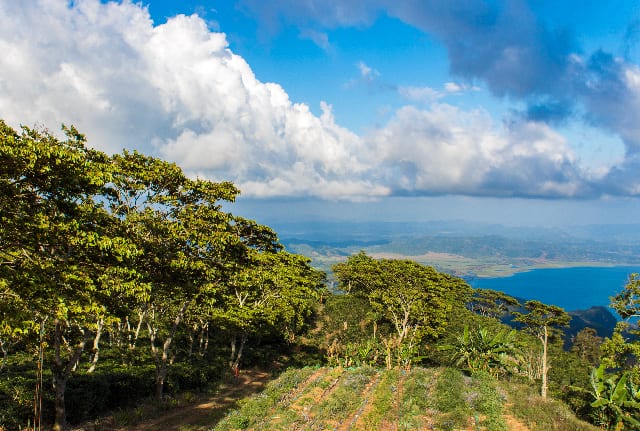
Professional coffee knowledge exchange more information about coffee beans Please follow the coffee workshop (official Wechat account cafe_style) in early July this year, coffee producing areas in Brazil were hit by frost. Coffee crops are being harvested, but weather conditions are expected to have an impact on next year's yield. When frost strikes, you can hardly protect your crops. But there are ways to deal with other unexpected days.
Global coffee producing area-Papua New Guinea
The frost in 1975 destroyed most coffee crops in Brazil, but stimulated the development of the coffee industry in Papua New Guinea. The Government has implemented a scheme to subsidize rural or collective landowners to create about 20 hectares of coffee plantations. This measure does increase the penetration of coffee in the local economy, resulting in an increase in the annual output of coffee. Papua New Guinea.

Global Coffee producing area of Papua New Guinea
The frost in 1975 destroyed most coffee crops in Brazil, but stimulated the development of the coffee industry in Papua New Guinea. The Government has implemented a scheme to subsidize rural or collective landowners to create about 20 hectares of coffee plantations. This measure does increase the penetration of coffee in the local economy, resulting in an increase in the annual output of coffee. Papua New Guinea.

Rich and balanced Bolivian Coffee Manor Flavor and Taste characteristics of Snow vein Manor
Coffee was really commercially produced in Bolivia in the 1950s (at first coffee trees were planted around homes as fences), but the coffee industry grew rapidly in a very short time. This is partly due to the impact of the Brazilian frost in 1975, when Brazil's coffee industry was hit hard, and Bolivia's coffee industry took advantage of the opportunity to develop rapidly. (the road to death

Arabica Coffee Flavor description introduction to the characteristics of High-quality Coffee Bean varieties
Arabica coffee accounts for 70% of all coffee production, and its excellent flavor and aroma make it the only coffee that Arabica beans can drink directly. However, its resistance to dryness, frost, diseases and insect pests is too low, especially the natural enemy of coffee-leaf rust, so all producing countries are committed to varieties.
Arabica Coffee Bean and Coffee Manor A brief introduction to Arabica Coffee Manor
Arabica coffee accounts for 70% of all coffee production, and its excellent flavor and aroma make it the only coffee that can be drunk directly. However, its resistance to dryness, frost, diseases and insect pests is too low, especially the natural enemy of coffee-leaf rust, so all producing countries are committed to variety improvement. Arabica species (Coffea

A brief introduction to the planting situation of Arabica Coffee Variety and Market Price
Arabica coffee accounts for 70% of all coffee production, and Arabica coffee accounts for 70% of all coffee products. its excellent flavor and aroma make it a direct drinkable coffee with only 8 Arabica beans (8). But its resistance to dryness, frost, diseases and insect pests is too low, especially the natural enemy of coffee-leaf rust, so all producing countries are in

Aftertaste of Colombian Coffee Flavor introduction to Fine Coffee in Manor area
The land of the District of Columbia [2] originally came from Maryland and Virginia. When the District of Columbia was founded, the north bank of the Potomac River included Georgetown (Georgetown,D.C.), Washington City (Washington City,D.C.) and Washington County (Washington County,D.C.). In 1878, the three places merged into Washington, D.C., and the city of Washington.

Introduction to the characteristics of Arabica Coffee Flavor description, Grinding degree treatment, Price and planting Environment
Arabica coffee accounts for 70% of all coffee production, and its excellent flavor and aroma make it a direct drinkable coffee with only eight Arabica beans (8). However, its resistance to dryness, frost, diseases and insect pests is too low, especially the natural enemy of coffee-leaf rust, so all producing countries are committed to products.
Let me introduce you to Brazilian coffee.
Brazil is vividly compared to the "giant" and "monarch" of the coffee world.